The Jazz.com Blog
June 09, 2009 · 1 comment
DVD Roundup: Rewriting the History of European Jazz
Thomas Cunniffe, an editor and regular contributor at jazz.com, keeps tabs on the movies for usjazz movies, to be more specific. He recently discussed several DVDs about Quincy Jones in this column (you can read it here) and also reviewed videos about Jackie Paris and Teddy Edwards (found here). Now he turns his attention to three other disksabout European jazz, Fred Joe Zawinul and Fred Hersch.T.G.
As a whole, the creative arts place a high value on individualism, but jazz makes it absolutely mandatory for its players to have their own voice. Why listen to a young player copying Ben Webster when you can hear a recording of the real thing? Yet finding your own voice can be a great challenge, especially if isolated from the musicians and/or the teachers.
One of the reasons European musicians and audiences have developed their unique appreciation for jazz is precisely because of geographic isolation. One of the films reviewed here celebrates European musicians who have found their own voices, but all three of the videos under consideration were made by European directors and they too have found unique ways to document their subjects.
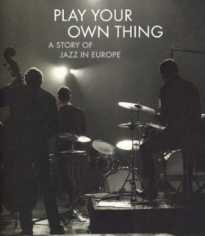
Play Your Own Thing, a film by Julian Benedikt, is subtitled A Story of Jazz in Europe. Perhaps the subtitle is there to prevent viewers from assuming that it is the story of jazz in Europe, but regardless, Benedikt has a story to tell, and apparently, he doesnt want the facts to get in the way. Benedikts storyline is: American jazzmen visit Europe / European jazzmen are enchanted and inspired by the music / Europe provides steady work for those American jazz musicians who are unable to work at home / Free jazz provides European jazzmen the opportunity to find their own voice at last.
All well and good, with plenty of musicians that follow that plotline. However, one musician wrecks havoc on this theory: Django Reinhardt. Reinhardt is widely considered to be the first European to find his own voice as a jazz musician. Benedikt tries to skirt the issue by barely mentioning Reinhardt and not including any of Reinhardts recordings on the soundtrack. Yet there is a segment at a Django festival where a group of gypsy youngsters play in the style of Django, and there is a pseudo-Django recording that appears in places through the film and over the final credits. Theres no real reason why Django couldnt have been discussed as a pioneer and an isolated example. Better that than nearly ignoring him.
Django aside, Benedikt does a fair job of documenting his story. If you have not heard the music of Tomasz Stanko, Till Brnner, Louis Sclavis, Joachim Khn, Albert Mangelsdorff, Norma Winstone and Enrico Rava, you will see and hear all of them in this film. The interviewees are mostly musicians who tell of their struggles with learning and playing this music while obstructed by the absence of role models and the presence of unsympathetic governments.
As in his film on the Blue Note label, Benedikt eschews strict chronology and uses shock cuts to steer his narrative. For example, immediately after Klaus Schulz relates the story of how Ornette Coleman and Don Cherry told Attila Zoller that he should draw from his own heritage in creating his voice, Benedikt jumps to a wild avant-garde trumpet solo by Arve Henriksen, thus moving 40 years ahead in the story! Eventually, we figure out what Benedikt has done (showing how others have found their own voice in the interim), but some of the shots used over the music make no sense at all. And could someone explain to me why 14 actors are listed in the credits to this documentary?
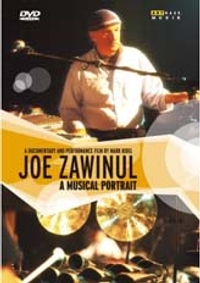
Joe Zawinul appears briefly in the Benedikt film, but we learn much more about his individual approach to music in Mark Kidels BBC film, Joe Zawinul: A Musical Portrait. The Zawinul Syndicate, the keyboardists last band is featured through nearly half of this hour-long film. As with his Weather Report work, Zawinuls music in this setting favored rhythmic and tonal density rather than harmonic sophistication. Between the main film and the bonus material, we hear the band in six different numbers, four of them complete (how many American documentaries would do that?). It is only on Three Postcards (performed late in the film) and on All About Simon (in the bonus material) that Zawinul plays straight jazz and the sparseness of the background is a shock after all of the polyrhythmic and multicultural sounds weve heard earlier. Zawinul is the only interviewee, and in the films most memorable sequence, he revisits his childhood home in Vienna and tells how, in the latter days of World War II, he narrowly escaped death when a bomb was dropped outside his apartment.
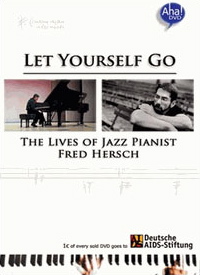
In creating her intimate documentary, Let Yourself Go: The Lives of Fred Hersch, German director Katja Duregger followed her subject for two years, and we can see the physical ravages on Hersch as HIV and AIDS took its toll. Late in the filming, Hersch went into a coma for several weeks and many in the jazz community feared he would succumb to his illness. Thankfully, he survived, and we can only hope that his recovery is not temporary. The documentary is actually a group of four films, a main documentary that discusses all the facets of Herschs creative and personal lives, and three shorter segments which focus on his playing, teaching and illness. Unfortunately, this bizarre separation of subjects makes the entire production disjointed, allows for unnecessary duplication of material between films, and leaves the film without a strong ending.
With some of the bonus performances included, and the various parts edited into a coherent whole, this would have been an excellent 90-minute documentary. Perhaps such a cut exists, for Duregger has submitted this film to several gay/lesbian film festivals. I cant imagine that the film could be presented at a festival screening in the same manner as the DVD. Still, in whatever form it takes, kudos to Ms. Duregger for tackling an important subject that deserved to be shared on film.
PLAY YOUR OWN THING 89 minutes EuroArts 2055748
Directed by Julian Benedikt. With Jan Garbarek, Django Bates, Paul Kuhn, Albert Mangelsdorff, Coco Schumann, Martial Solal, Chris Barber, Ren Urtreger, Juliette Greco, Daniel Humair, Dee Dee Bridgewater, Palle Mikkelborg, NIels Henning rsted-Pedersen, Stan Tracey, Joe Zawinul, Till Brnner, Klaus Schulz, Enrico Rava, Joachim Khn, Tomasz Stanko, Louis Sclavis, Norma Winstone, Marilyn Mazur, Manfred Eicher.
JOE ZAWINUL: A MUSICAL PORTRAIT 59 minutes (plus 16 minutes bonus) Art Haus Musik 101 819
Directed by Mark Kindel. Featuring The Zawinul Syndicate: Joe Zawinul (keyboards), Sabine Kabongo (vocals), Amit Chatterjee (guitar & vocals), Linley Marthe (electric bass), Nathaniel Townsley III (drums), Manolo Badrena (percussion).
LET YOURSELF GO: THE LIVES OF FRED HERSCH 80 minutes (plus 27 minutes bonus) Aha DVD (no catalog number)
Directed by Katja Duregger. Featuring the Fred Hersch Trio: Fred Hersch (piano), John Hebert (bass), Nasheet Waits (drums). With Scott Morgan, Hank Hersch, Michael MacDonald, Sophia Rosoff, Charles Hamlen, Norma Winstone, Christopher ORiley.
This blog entry posted by Thomas Cunniffe.
Tags:

With regard to this: 'As with his Weather Report work, Zawinuls music in this setting favored rhythmic and tonal density rather than harmonic sophistication' I'm not sure where Mr. Cunliffe gets the idea that Zawinul's music with Weather Repot lacked harmonic sophistication. Even a cursory look at such recordings as 'Tale Spinnin', or 'Heavy Weather' (to take just two examples), and the the harmonic structures of such pieces as 'Man in the Green Shirt' or 'A Remark You Made' shows very clearly that Zawinul was very much aware of, and made great use of harmonic sophistication in his compositions. Just because he also had an ear for a wide timbral palette and for rhythmic diversity did not mean that his pieces were in any way harmonically unsophisticated. As a musician I can attest to the fact that Zawinul's Weahter Report music is very harmonically challenging. While I understand the point Mr. Cunliffe is trying to make, let's not get carried away.