The Jazz.com Blog
July 23, 2009 · 0 comments
Random Jazz Notes . . . and a Badly Burned High D
Jared Pauleys article on the history of the Fender Rhodes electric piano brings back fond memories of my first experiences with this marvelous invention.

I was never a big fan of plugged-in keyboardsthe touch never felt right on most of these instruments, and hitting the keys was like turning on a switch. I wanted gradations of analog sound, and that was the one thing these machines refused to give me.
But the Rhodes was something else, and really in a class by itself. The high register had a sweet ping to the tone, and low notes got crunchy in a soulful way. Even though I was a loyal fan of the ebony and ivory, I found something special in the Fender Rhodes back in those pre-MIDI days that no later electric keyboard has surpassed.
I got my first Rhodes off a down-on-his-luck rocker who sold me his beat-up suitcase model on the cheap. I still recall the cigarette burn on the high D, which created a small crater in the center of the key. Was it just my imagination, or did it give that note a bit more heat when I hit it?
It was a fickle machine, and sometimes gave up the ghost. I remember hauling it down to West LA Music one day for a repair. The staff was obliging and giving me all their attention, but promptly deserted me when Larry Coryell (then at the peak of his Eleventh House fame) stomped on to the premises demanding immediate attention for his guitar problem du jour. Enough time for a two-drink intermission and forty choruses of rhythm changes elapsed before they remembered the teenage jazzista and his broken down Fender Rhodes. But if I had been Mr. Coryell, I would have given them high marks for prompt and fawning service.
I wish I still owned that clunky dinosaur. But I needed some cash a few years laterI wanted to buy a vibraphoneand sold my Fender Rhodes to some teenage rocker who was planning his rise to fame supported by a phalanx of keyboards. I imagine it went on to many later owners.
Whenever I see an old suitcase model Fender Rhodes, I look for a cigarette burn on the high D key. If you run across it, let me know.
Another Rhodes memento I wish I had kept: The Fender Rhodes company issued a glossy flyer back in the 1970s that I picked up at my neighborhood music store (remember those?). The flyer came with a flimsy paper-thin plastic disk that you could play on your hi-fi. It featured Herbie Hancock demonstrating the Fender Rhodes piano.
My favorite moment: Herbie is grooving intensely on a song (Watermelon Man as I recall), and the music seemed to be reaching a climax, when Herbie shouts out over the music: Now I turn on . . . the VIBRATO!
I wish someone would reissue this track on CD, but I'm not holding my breath.
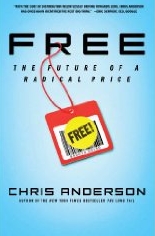
This begs the question . . . Since when is Free more expensive than Cheap?
Andersons book has implications for musiciansunpleasant ones, perhaps. Its premise is that giving stuff away can be smarter than charging for it. Unfortunately, this is a career strategy with which jazz players are all too familiar.
But if a jazz musician wrote this book, the title would need to be changed from Free to Playing for the Door.
A few of my favorite worthless non-jazz blog sites:
I feel better about my high school prom photo every time I look at Awkward Family Photos.
Any list of "unnecessary" blogs needs to include The Blog of Unnecessary Quotation Marks.
And what kind of person would collect photos of Passive Aggressive Notes?

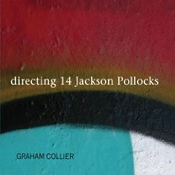
Talk about confidence. Not only does Graham Collier publish a book on jazz composition, the newly released The Jazz Composer, but he puts out a CD (in a matching color scheme) showing how it's done . . . featuring his own works.
There are a few precedents here. Back in my student days, I bought a huge book, on jazz composition written by Bill Russo. All the examples in this 850 page book were, as I recall, taken from compositions by . . . Bill Russo.
If you were studying Russo's book and wanted to check out some Duke Ellington or Gil Evans charts . . . well, tough luck. But you did get plenty of chances to mull over Russo's Halls of Brass (given the context, I think an alliterative title would have been more appropriate).
But my favorite example of a music writer showing by doing came when Gunther Schuller published a book on the art of conducting, in which he dissected with unforgiving precision all of the tempo problems, mistakes and infidelities to the score of the famous masters of the batonand then Schuller released a CD showing the correct way of conducting Brahmss First and Beethovens Fifth.
Take that, Toscanini!
Colliers writing is refreshing, and his basic premise is both provocative and sound. Jazz is something that happens in real time, once, he asserts. You might think that this claim would subvert a book on jazz composition from the outsethow can you delineate something that refuses to be pinned down? But his discursive, frank commentary keeps things lively. And (in contrast to Russos book) this text can be enjoyed by jazz fans even if they cant read a note of music. There are a handful of musical examplesyes, from Colliers own compositionsbut this book is more philosophical than musicological.
Colliers book goes against the grain. Time and time again in this work, the author adopts a bold position and sticks by it. Here is a typical quote:
There is a heaviness in contemporary jazz, created by plodding rhythm sections, too much writing, too many notes in the solos, and by the lack of room in which the performance can breathe. The main reason is that bebop has left jazz with a legacy of a technique-driven music, with little space around it, and seemingly little opportunity for the emergence of less technically inclined players.
As you can see, Collier is not afraid of rocking the boat. And though I am more favorably inclined toward the jazz repertory movement than Collier, I must admit that he scores a few points with his spirited attack.
I enjoyed the book, but I think I would enjoy seeing Collier in a debate even more. On any short list of the most polemical writers in jazz today, he is fighting for the top spot. You'd have to go back to that other jazz writer Collier to find anything comparable. And didn't that bloke get into a public debate with Mr. Marsalis over these same tricky issues of tradition and canon? It may be time for round two.

More than a quarter century after Art Peppers death, Laurie Pepper continues to find first-rate music by her late husband to release on the Widows Taste label. I hope she makes more than a widows mite off her latest release, Art Pepper: The Art History Project, which is the best yet of her posthumous productions.
This three-disk set is a good place for those unfamiliar with the altoist to sample his wares. It brings together works spanning Peppers entire career, starting with Shorty Rogerss feature numberappropriately named Art Pepperfor the Stan Kenton Innovations Orchestra, and continuing all the way to live tracks from a Fat Tuesdays performance with Stanley Cowell, Ben Riley and George Mraz recorded only a few weeks before Peppers death at age 56.
This blog entry posted by Ted Gioia
Tags:

Comments are closed.