The Jazz.com Blog
July 06, 2009 · 0 comments
Nurturing Jazz in a Tough Town
Willard Jenkins continues his investigations of successful grassroots jazz programs around the United States. In previous installments, he looked at Seattles Earshot Jazz and Manchester Craftsmens Guild in Pittsburgh. Now he talks to Tom Guralnick who is working to keep jazz alive in the Southwest. T.G.
Back in the early 90s your correspondent was part of a team effort between the New England Foundation for the Arts and the sadly-defunct National Jazz Service Organization as the architects behind the Lila Wallace-Readers Digest National Jazz Network. That effort, seeded by what at that time was an unprecedented (for jazz) $3.4M allocation, brought together seemingly disparate jazz presenting organizations ranging from old warhorses like Jazzmobile to community spaces like Koncepts Cultural Gallery in Oakland, to organizations which had no venue of their own but were doing significant work, like the Northeast Ohio Jazz Society, to organizations in seemingly unlikely places. One such organization was Outpost Productions, based in Albuquerque. NM. The founder and director of Outpost, avant garde (his characterization) saxophonist-composer Tom Guralnick soldiers on. Like many do-it-yourselfers in this business of presenting serious music, Guralnick came into it a bit by happenstance.
How did you get started as a presenter?
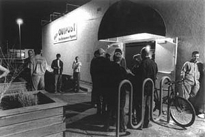
I didnt start Outpost until 1986. First I ran the New Mexico Jazz Workshop, thats how I got into presenting and got into the non-profit presenting world. It was a collective of musicians and they were kind of de-collectivizing as collectives doall in good spiritsbut they were all going in different directions. They werent really playing together as much anymore, they had $1000 in the bank and they said why dont you produce some concerts. And at that point I got bitten by the bug and started writing grants and turned it into a presenting organization and moved it to Albuquerque. It was [originally] based in Santa Fe.
How did your work with the New Mexico Jazz Workshop evolve into Outpost?
I left for a few years in 80-81 to pursue my own music; my whole reason for doing [New Mexico Jazz Workshop] was as a musician/presenter like so many of us are, like Marty Ashby, Randall Kline, Tim Jacksonwho else would be so foolish [laughs]? I really wanted to pursue my own music so I left New Mexico and I was studying in Boston, living at my folks house. I put out a solo record at that point and I was touring a little bit and then I decided to get a Masters degree at Wesleyan in World Music and do my own stuff. . . . And when I came back to Albuquerque it was to finish up my masters thesis.
I thought I was just gonna be here for 6 months but I literally drove across the border and felt that I had come home and decided to make this my base of operations. I decided I would start an organization that had its own performance space which would be kind of the vision, like many of the small performance spaces I had been to in Europewhere you could have an audience of 40-100 people and it felt very good. I decided to do a non-profit that was an intimate space, and the idea was to present a wide variety of music, more focused on experimental music and world music; but once I got going with it I felt that really my roots and the basis of what I was doing was in the extended jazz world. So jazz very quickly became a part of what we would do at the space. It was very much a kind of artist-run, Albuquerque-style loft.
Was Outpost pretty much a one-man operation at the start?
It was at the beginning. I had two friends on the board of directors who were very happy to let me get things going and they did all the legal work that needed to be done and we gradually built to a [full] board and a small staff.
Describe those first few years of Outpost.
The first couple of years I actually didnt have the space yet so I did performances in bookstores, larger theaters. I cooperated with some organizations in town that had some funding and put together world music shows like Los Pleneros De La 21, Indian music with T Viswanathan, a South Indian musician who was a teacher of mine at Wesleyan. I was doing African music, then I did a show with Johnny Shines, Pops Staples and John Hammond. . . . The idea was to do a world music blend, and then I was doing more experimental music in bookstores, which also included my own music and people like Christian Marclay, Jane Ira Bloom. . . and smaller shows along those lines for a couple of years.
Outpost originally operated out of a storefront.
I sold my house and bought the performance space myself and lived in the apartment upstairs and opened the storefront as a performance space. At that point it was a one-man showselling tickets, running sound, building the stage. . . .
How did you build Outpost into an actual organization?
I had done a lot of grant writing with the New Mexico Jazz Workshop, really at the beginning of grant writing. When I started applying for grants at the NEA and the New Mexico Arts Division, our cohorts were the very young Santa Fe Chamber Music Festival, the Santa Fe Opera. . . so all the organizations were young and the NEA was only four years old [1976]. So I was kind of at the beginning of all that and I just transferred all the things I had learned completely on my own, as most of us in the field then did things, by just learning how to do it. So I had some skills in that direction and I applied for stuff and I think it was about 93 when I heard about the Lila Wallace-Readers Digest possibilities which radically changed what I thought we could do. At that point presenting nationally-touring jazz acts and actually booking them became a possibility. So that first year we presented Steve Lacy, Roscoe Mitchell, Jeanne Lee, and many others.
Inclusion in the Lila Wallace-Readers Digest National Jazz Network apparently only became an exciting turn for the organization.
Yeah, and almost resulted in the failure of the organization [laughs]. I will never forget the first [Network] meeting that I attended in Chicago when Edsel Matthews [the late director of Koncepts Cultural Gallery in Oakland] said sounds like a lotta money. . . until you have itand I couldnt believe somebody was saying that [laughs]! We had a $90K budget and we were receiving about $30K from the program that first year. I immediately thought wow, now Im rich, I can do all these things. . . . I went through that money so quickly! When you do concerts in a small space its very easy if you pay a lot of money to lose a lot of money fast, especially if the music is challenging. So it was a quick learning experience that Edsel was right.
In 2000 we moved into a 150 seat venue that is about three times the size of the storefront. The performance space itself is about 2500 square feet; we seat 150 in comfortable chairs. Its surrounded by art gallery walls so we always have a visual arts exhibit. Its actually set up a lot like the storefront only quite a bit bigger. There are also two offices in the front, an office in the back, and an actual green room, a little refreshment area. . . .
Did you have to physically transform the space?
It used to be an old sheet music store and before we came it was an aikido studio, so it was completely empty. We had to build the stage, build up the offices, the ramps, but there wasnt a lot of demolition to do.
Does Outpost own this space?
The space is owned privately by me and two partners, to be owned eventually by Outpost, [which] leases at a good rate. . . . We do it for the music.
How has the organizational structure of Outpost evolved?
The staff has grown modestly. I have one person working full-time and two other people working part-time. We also have a lot of people we contract with to teach classes and do sound. We have an ongoing, extensive education program three days a week; David Parlatto is the head of that. We have student small jazz ensemble classes 3-days a week in beginning, intermediate, and advanced level over 30 weeks a year. In the evenings we have adult jazz ensemble classes, four different ensembles.
How do you fund these education activities?
There are local foundations that are very interested in funding it, the city gives us some money, and from all our other funding sources a part of it goes to that. We also do field trips to the space where we have kids come to our performances, and we have an African drumming class. There are many people who are interested in funding those educational activities.
Do your education and concert activities intersect?
For instance the [string band] Carolina Chocolate Drops were here and they played a Sunday night concert and a Monday morning kids show. From time to time weve had the more advanced youth ensemble open up for our Thursday night series; theyve opened up for Cindy Blackman, Frank Morgan. We also have youth performance nights, teen performance nights we call Roust the House and we pay the kids to perform.
You mentioned the support you get from community foundations to support your education program; at what point do you feel that Outpost really had a breakthrough in your community?
Its coming [laughs], I know its coming. . . . I dont know if it happened at a particular point, we still have a ways to go in terms of the community really knowing about us. I still think there are people who dont know about us, which is amazing. At another level many people see us a real institution and something of real value in the community. After the Lila Wallace program we got into the Doris Duke Foundation JazzNet, and after that their mid-size presenting organization initiative. The people who know about us and love us are totally dedicated to the organization and there is a general awareness and respect but theres still room for developing new audiences and new awareness of us, which we try in every way.
Around 2000 we presented Dave Brubeck which was the first really big jazz concert that we presented and it was a huge success. I view Brubeck as kind of a funder because his fee is so reasonable compared to what he can draw and it becomes a winning situation for every presenter and he has to know that, and I think its really admirable. I guess hes in a position where he can do that, but he also chooses to do it. . . .
So not only having a successful presentation of a large concert but we also feel that weve become the main jazz presenter of touring jazz here in New Mexico and we feel thats part of our mission. By doing these bigger concerts well become better known in the community because in our small space there are people who arent going to come to that kind of space, which is non-smoking and not a place to eat and not a club. . . . And there are people who wont come to what they think of as kind of a funky place, even though its quite elegant and nice. So doing larger concerts we hope will raise our profile in the community.
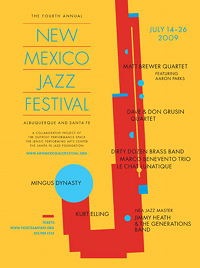
We do them at Popejoy Hall, the Kimo Theatre, the National Hispanic Cultural Center, and weve also started to present concerts in Santa Fe at the Lensic, we have a great partnership with them. Were also going into the fourth year of the New Mexico Jazz Festival, which is another high profile event presenting people like Sonny Rollins, Branford Marsalis, Cassandra Wilson, Dianne Reeves, McCoy Tyner. . . really top names in jazz and thats something weve done for the last four years as well. Its a partnership with the Lensic and with Bumblebee Bob Weils Santa Fe Jazz Foundation.
So between Albuquerque and Santa Fe you actually operate out of about five spaces?
Yeah, and with this festival weve presented at the Civic Center in Albuquerque, at the Outpost, at the Civic Plaza (free concerts), at the Kimo, the Lensic, at the plaza in Santa Fe. . . . The principle of it is to be at least a bi-city festival with the potential to go beyond there if we can.
Whats your typical presenting season?
We present from October to December, March to May, and then in the summer we do a local [Thursday] jazz series plus the New Mexico Jazz Festival. We feel its really important to present resident artists so that Thursday night series is dedicated to them. The festival is the last two weeks of July.
The festival is an obvious example of the kinds of partnerships youve been able to develop.
Partnerships have been really important to me since I got into this business. Im involved in the Western Jazz Presenters Network, in the New Mexico Presenters Alliance, and forming partnerships wherever I can. When Bruce Dunlap ran the Santa Fe Jazz and International Music Festival the precursor to the New Mexico Jazz FestivalI would partner with him constantly, and lately Ive been partnering a lot with Lee Berks Friends of Santa Fe Jazz organizationwhen I present someone here (Albuquerque) he presents them [in Santa Fe] in a block booking type situation. Ive just done this from the beginning, I think its good for the musicians, its good for the presenters because we can make fees more affordable and the musicians get more gigs and they get more of a sense of New Mexico. . . and its fun. Part of this is nobody gets rich doing it so we might as well have a good time and the camaraderie of partnerships is really important.
Albuquerque is a tough town, theres a lot going on, but getting audiences out is difficult and in fact in the last few years weve really had a hard time drawing large audiences with these larger shows, despite the fact that we get great coverage and do publicity. Santa Fe is a smaller community but its a more centered community and there are more people who are ready and able to spend money and go out to concerts, and because theres less going on its easier to draw a crowd. So this has been a challenge in Albuquerque. The Outpost concerts get more and more crowded and were filling the place more than we ever have, but the larger [Albuquerque] concerts are difficult to do.
How many larger concerts do you present a year?
Last year we did seven or eight; we present between 80-100 performances a year. What is happening in that room in terms of community makes me feel really good practically every night theres a show here. I think as a presenter when I have some input into getting Roswell Rudd and Steve Lacy together for a little tour and then seeing Lacy on the stage smiling in a way Id never seen him smile before when he was watching and listening to Roswell play, seeing old friends with just this joy coming out of it, that was a really great feeling. And because I had some input in suggesting they tour together and out of that tour came that Monk record that was a great moment. The legends that have played here. . . Horace Tapscott showing up on my stage. . . and [musicians] you know wouldnt play here if it werent for Outpost, it really feels great.
This blog entry posted by Willard Jenkins
Tags:

Comments are closed.