The Jazz.com Blog
August 13, 2009 · 0 comments
Lives of the Great Trombonists
A few days ago, one of the music discussion forums mulled over whether the trombone is dead. The topic was hotly debated, and though defenders of the bone made their points, readers were left with a vaguely disquieting sense that (in the words of one poster): The trombone isn't dead, but it is on a downward slide.
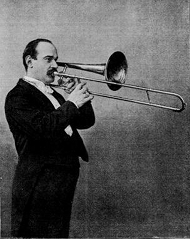
Fortunately no one has told jazz.coms Alex W. Rodriguez, who has been chronicling the masters of the trombone in a series of first rate reviews and encyclopedia entries for our site. When he is not writing here, he can be found cogitating at his own blog Lubricity. You can tell you have arrived at Alex's jazz blog if you see a photo at the top of (you guessed it) a tromboneplayed, in this instance, by the great Jack Teagarden.
Alex has been on a tear recently, and has written a whole batch of mini-bios of great trombonists for the jazz.com encyclopedia. It would be easy to miss this collectionwhich serves as a great intro to the trombone tradition. So I am sharing links to a dozen of these articles below. In other words, if you havent yet made the acquaintance of Kid, Trummy, Miff, Tricky and all the rest, now is your chance.
Lawrence Brown: Lawrence Brown rounded out Duke Ellington's innovative trombone trifecta in the 1930s and 1940s, and he played in a virtuosic, highly decorated style. His distinct instrumental voice made him one of Ellington's preferred soloists for nearly two decades.Read more here
Tommy Dorsey: Tommy Dorsey was one of the first jazz trombonists to convey meaning and intention with every note he played. Best known for his pure tone, impeccable vibrato, long phrasing and ease in the upper register, Dorsey was also one of the few trombonists - or jazz musicians, for that matter - of his generation to achieve both fame and financial success. Read more here
Bennie Green: Trombonist Bennie Green kept pace with the innovations of bebop while maintaining a deep closeness to the blues and popular song. His style combines a bright, full sound with sharp articulation and clarity in the upper register, reminiscent of his idol, Trummy Young, with the bebop phrasing and chromaticism later perfected by J.J. JohnsonRead more here
Jimmy Harrison: Trombonist Jimmy Harrison was the rare instrumentalist who developed a personal vocabulary for jazz which was distinct from, and preceded, the influential approach of trumpeter Louis Armstrong. His fluid improvisation, instrumental range, rhythmic articulation, sense of humor and huge sound earned him wide respect among his peers on the 1920s New York City jazz scene.Read more here
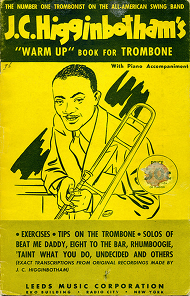
J.C. Higginbotham: J.C. Higginbotham brought a uniquely bombastic element to jazz trombone playing, making a career as one of the Swing Era's most memorable musical architects. Higginbotham was one of the first to apply wide lip trills and upper-register glissando techniques to the jazz aesthetic, always adding excitement to the bands with whom he played, including Fletcher Henderson, Chick Webb and Louis Armstrong.Read more here
Miff Mole: Miff Mole was one of the first to bring the tailgate style of Kid Ory and other New Orleans trombonists to his hometown of New York, and he made some of the first jazz recordings. In doing so, he added his own, more soloistic approach to the instrument, which was characterized by wide leaps in pitch and clear, rhythmic articulation. This virtuosity prompted Tommy Dorsey to call him "the Babe Ruth of the trombone."Read more here
Benny Morton: Morton's trombone sound is characterized by a wide range and facility in all parts of the instrument, a soft, smooth tone and roots in the early "hot" trombone styles that sometimes feature glissandi and blues effects. Morton was also an excellent "tailgate" player when the situation called for it, as was the case later in his career when he performed with a number of Dixieland revival leaders.Read more here
Tricky Sam Nanton: Joe "Tricky Sam" Nanton, a member of Duke Ellington's famed trombone section for nearly two decades, exemplified and advanced the plunger-mute style of early trombone playing. Nanton's playing usually featured very simple melodic phrasing and a level of expressivity unrivaled by most of his contemporaries. Nanton was able to produce a wide variety of expressive effects on the trombone beyond the "wa-wa" tradition, including horse-like whinnies and a "ya-ya" effect which very closely imitated the sound of the human voice. Read more here
Kid Ory: Kid Ory was the original "tailgate" trombonist: his enormous brassy sound, audacious glissandi and loud sense of humor came to define the New Orleans trombone sound. A key element in the groups of King Oliver, Jelly Roll Morton and Louis Armstrong, Ory led the first African-American ensemble to record jazz, and he composed many early jazz hits, including "Ory's Creole Trombone" and "Muskrat Ramble." In the 1940s, he was a leader of the Dixieland revival movement.Read more here
Jack Teagarden: Trombonist and singer Jack Teagarden may have been at ease in the tailgate style of his generation, but he was the first to step out of that role and stand on his own as a melodic improviser. Where his trombone playing was highly decorative and technical, his singing was understated, a subtle baritone coated with very light vibrato. But both, while different in timbre, achieved the same goal: they convey a deep melancholic sadness rooted in the blues. Read more here
Juan Tizol: Juan Tizol, one of the first prominent jazz musicians of Hispanic descent, brought his Puerto Rican heritage and excellent valve trombone technique into the Duke Ellington orchestra, where he helped plant the seeds of Latin jazz. Best known for composing the jazz standard "Caravan," Tizol was the most extensively-trained classical musician in Ellington's orchestra, and could execute a "legit" or "straight" melodic concept when called upon to do so.... Read more here
Trummy Young: Trombonist Trummy Young developed a bright, energetic sound with unprecedented facility in the upper register which opened new opportunities for the trombone in jazz music. His work in reshaping the role of his instrument beyond tailgate lines provided a key resource for future generations. As a vocalist, his tenor voice was characterized by a breathy, joking quality.Read more here
For other bios (of trombonists or other jazz artists), visit our Encyclopedia of Jazz Musicians here. It is still a work-in-progress with a few missing entries, but in the last few days, editor Tim Wilkins published the 1,800th entry, and he is adding more every month.
This blog entry posted by Ted Gioia
Tags:

Comments are closed.