The Jazz.com Blog
August 19, 2009 · 0 comments
How Jazz is Funded in France (Part 1)
Many US jazz fans wonder where all the money comes from to support the thousands of European jazz festival that seem to be growing each year while American events are canceled or downsized. Thierry Qunum, a leading jazz critic based in Paris, tells us how this works in his home country. This is the first installment of a two-part articleone that has some surprising twists and a few perspectives that might be worth the consideration of US-based jazz event promoters. T.G.
The idea that jazz in Europeunlike in the USAis widely supported by government money has been written about a lot lately. But if we want to tackle this subject as far as France is concerned, we should first go back to two historical facts : France has been a country with a heavily centralized administration for centuries and, in spite of some dramatic changes of political regimes through revolutions and riots, the idea of the grandeur of the country has lingered on.
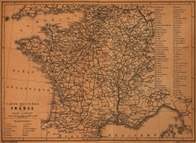
Expressing this grandeur through art, among other cultural domains, has been a mainstay of most governments from the time when king Francis the 1st, after his victories in the early 16th century Italian Wars, brought back painter Leonardo Da Vinci to France. The latter remained famous for his Joconde, the portrait of a smiling lady which is still considered one of the gems of the Louvre museum in Paris which, by the way, was the former royal palace.
Jazz has been considered an art in France ever since the post-World War I era, when writers like Jean Cocteau or painters like Fernand Lger raved about this new music or got inspired by it. Its no wonder, then, that a present day head of the Department of Culture of the French Republic should officially give jazz musicians like Roy Haynes, Ahmad Jamal the medal of Commandeur des Arts et Lettres (Commander of Arts and Literature).
The second historical fact is that in France, since 1901, a law allows any group of three persons to start an associationa non-profit organization that can deal with almost any type of activity, that can have an unlimited number of members, and that can be sponsored privately and publicly provided its activity is considered useful by official institutions. Sports teams are organized in associations; there are stamp collectors associations and others devoted to spreading the art of lace making in obscure country districts way out in the mountains. And of course there are cultural associations, some of whom (apart from private sponsoring, which is not todays subject) are heavily sponsored by the central state, the Rgions (more or less the equivalent of the States of the Union, with less autonomy, though), and then some. Its essentially through these associations that jazz in France (and not only French Jazz) gets sponsored.
The French Orchestre National de Jazz (ONJ), thats unique in the world and may, given its name, be thought to be directly financed by the government, is actually managed by an association called AJON. The leader of the ONJwho chooses the members of the band and the repertoireis renewed every three years. Most of the former bosses of the ONJ have had a hard time recovering from the ideal working conditions (nice wages, paid rehearsals, no need to worry about concerts and tours, neither home nor abroad: the AJON takes care of everything etc) they experienced during their tenure.
Vibist and composer Frank Tortiller, who led the last ONJ until December 08, was wiser: Some colleagues had warned me about the post-ONJ lag, so I thought things out right from the beginning and founded an association designed to manage my orchestra after it would lose its ONJ label. This association developed a partnership with the Rgion Bourgogne (Burgundy), where I come from. This allowed me to maintain the same orchestra, which is now sponsored by Burgundy and called The Orchestra/Franck Tortiller, while the new ONJ has now been taken care of by the AJON, as a matter of course.
Indeed, if each Rgion doesnt sponsor its own orchestra, quite a few of them do. Of course there is an obligation for the sponsored orchestra to play at home, to organize master classes and other teaching projects within the boundaries of the Rgion, and to spread the reputation of their sponsors in the rest of the country and abroad. What the Rgions also do is sponsor jazz festivals. These have become so popular and numerous in France that no Rgion could stand the shame of not having one on its territory.
This is the end of part one of Thierry Qunums report on the funding of jazz in France. Check back soon for part two.
Tags:

Comments are closed.