The Jazz.com Blog
August 27, 2009 · 0 comments
The Disciples of Lester Young: A Recommended Playlist
I was in my 20s, and giving a lecture on Lester Young to a large assembly of Stanford students, when Stan Getz strolls through the door and sits in the front of the classroom.
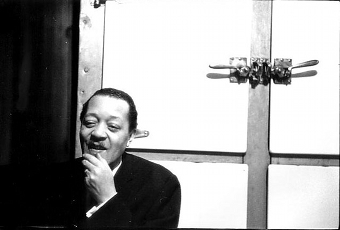
My first reaction was to ask Stan to teach the class. No musician of the postwar generation studied Young more closely than Getz, or took what he learned so far. For all his individual successes, Getz will always be linked in the minds of jazz fans with the great pioneer of Kansas City jazz. But Stan—who was serving as artist–in-residence at Stanford at the time—was shy around students, especially large audiences of them. So I continued with my lecture.
Stan looked with interest at the transcription I handed out to the students of Lester Young’s solo on “Lady Be Good.” I knew that Getz knew this solo intimately, but I doubt he had ever seen it written out before. The whole idea of a classroom of college students studying Lester Young was clearly satisfying to him, especailly so since Getz was self-conscious about having dropped out of high school (despite encouragement from teachers that he was destined for Juilliard) and never getting to college. Seeing Prez in a syllabus and studied as though he were Mozart or Beethoven must have struck him as a validation of his own life choices. And at one point, Getz even offered some comments for the students—a rarity in these types of settings. (Although Stan would later become more comfortable in a classroom, as a general rule the more intimate the setting, the better he was.)
After the class, I bantered with Stan about Lester Young. I asked him which Lester Young recordings had impressed him most as a young man, and he cited the impressive but all-too-short Young appearance on Count Basie’s “Song of the Islands” from 1939 (which is today’s Classic Revisited on jazz.com in honor of Young’s 100th birthday). I then asked him if it was true, as I had heard, that Getz had quit Stan Kenton’s group after the bandleader made a derogatory remark about Lester Young. Getz not only confirmed the story, but even did an entertaining impression of Kenton dissing Young for me.
There are other questions I wished I had asked him back then, when we were seeing each other almost every day. (For example, was there any truth to the rumor—that I only heard later—that Miles Davis asked Getz to join the Davis band in the late 1950s.) But I was always pestering him with questions about various other jazz musicians—and, at least, there is plenty that he said back then that I still mull over and helped me in my own development. In particular, I have fond memories of the wide-eyed enthusiasm he shared for Lester Young. Stan almost seemed as young as the college students around him when he was talking about Lester.
A lot of tributes are circulating about Lester Young on the occasion of his birthday. (I especially recommend Ethan Iverson’s mind-expanding efforts here.) But let’s also take out some time to remember the disciples of Prez—those great followers in Young’s wake who also made outstanding music of their own.
Below is a suggested playlist of tracks by saxophonists inspired by Young, with a link to a full review for each performance, where you can find a critic’s assessment, complete personnel and recording info, a rating from 0 to 100, and a place to go for a (legal) download.
Happy listening!

Brew Moore:
“I Can't Believe that You're in Love with Me”
Reviewed by Scott Albin
Brew famously claimed that “anyone who doesn’t play like Prez is wrong.”

Zoot Sims:
“Does the Sun Really Shine on the Moon?”
Reviewed by Bill Kirchner
In this fine sax-with-strings setting, arranged by Gary McFarland, Zoot shows his deep roots in Prez.

Charlie Parker:
“Lester Leaps In”
Reviewed by Marcus Singletary
Charlie Parker built his bebop superstructures on the foundation of Lester Young’s Kansas City style. Here Parker performs one of Young’s feature numbers from his Count Basie days.

Al Cohn (with Jimmy Rowles):
“Them There Eyes”
Reviewed by Ted Gioia
This is six-and-a-half minutes of sheer fun. Too bad it costs $150 to buy this album nowadays.

Dexter Gordon & Wardell Gray:
“The Chase”
Reviewed by Ted Gioia
Both Dexter Gordon and Wardell Gray studied their Lester Young recordings, and Dexter even ditched school when Young came to town so he could hear Prez in person. Here these friends and rivals engage in a classic tenor battle from 1947.

Stan Getz (with Woody Herman):
“Early Autumn”
Reviewed by David Franklin
This popular 1948 track did more than any other record to signal the arrival of new generation of postwar Lester Young devotees.

Paul Quinichette:
“Paul’s Bunion”
Reviewed by Ted Gioia
His style was so strongly reminiscent of Young's, that Paul Quinichette was inevitably dubbed the "Vice Pres."

Lee Konitz:
“Tenorlee / Lady Be Good”
Reviewed by Chris Kelsey
If you don’t believe that the modern jazz players went back and studied—and in this instance memorized—solos by Lester Young, this track should convince you. Konitz channels Young’s first Basie recording on this perfomance.

Gerry Mulligan (with Chet Baker):
“Jeru”
Reviewed by Eric Novod
The West Coast jazz movement of the 1950s was greatly indebted to Lester Young, and even a baritone saxophonist could not escape the pervasive influence.

Sonny Rollins:
“Softly as in a Morning Sunrise”
Reviewed by Walter Kolosky
Rollins is often viewed as the antithesis to the cool school Prez disciples of the 1950s, but his thematic approach to improvisation reveals strong roots in Young’s conception of solo construction.

Paul Desmond:
“Wendy”
Reviewed by Ted Gioia
Desmond’s conception of saxophony stands firmly in the Young tradition of relaxed phrasing and coherent melodicism.
This blog entry posted by Ted Gioia
Tags:

Comments are closed.