The Jazz.com Blog
September 13, 2009 · 1 comment
Pianist Laurence Hobgood with Kurt Elling at Smalls
Laurence Hobgood is best known to jazz fans as accompanist and musical director for vocalist Kurt Elling, but discerning listeners have recognized that this pianist is big talent in his own right. Now on the heels of his recent CD When the Heart Dances, Hobgood is doing some gigs as a bandleader, and in a turnaround he brings in the dynamic Mr. Elling as his guest. Ralph A. Miriello, a regular contributor to these pages, was on hand to hear the proceedings. T.G.
It was an overcast Monday evening, the end of the Labor Day weekend. I made the trek from Connecticut to the tiny basement club, Smalls, in the West Village, a venue I had never patronized. A tarnished saxophone hung over the arched entrance that led to the club as I made my way down the steep narrow stairway into the bowels of this lower level bar and performance spacea music lovers dive in the best sense of the word.
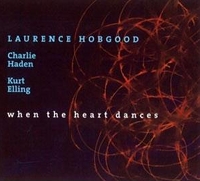
The opportunity to see pianist Laurence Hobgood and his trio in an intimate setting was just too enticing to pass up. I had reviewed a couple of songs from Hobgoods latest CD When the Heart Dancesan album on which he collaborated with the fine bassist Charlie Haden and the vocalist Kurt Ellingand found it to be one of the most enjoyable releases I had the opportunity to listen to this year.
Smalls is around the corner from the venerable Village Vanguard. This no-frills club can accommodate about seventy-five patrons at capacity. The stage is compact and not elevated. There is a photo portrait of a young and smiling Louis Armstrong hanging over center stage, setting the mood. Carefully placed mirrors give the audience an illuminating view of the pianists keyboard and the drummers traps.
The audience was packed, listening to the music of the Lafayette Harris Trio as I made my way into the club. Harris is a talented, straight-ahead pianist whose playing is steeped in the blues. His trio included Lonnie Plaxico on electric stand up bass and Montez Coleman on drums. I heard the trio play songs from Sonny Rollins and Cassandra Wilson before they closed out their set to an appreciative audience.
As the Laurence Hodgood Trio made its way to the tight stage, many in the audience were anxiously awaiting the arrival of the special guest, vocalist Kurt Elling. When Mr. Elling did arrive he and Mr. Hobgood warmly greeted each other. Before the set began, Mr. Elling exercised his vocal chords to set the gain on the microphone he would be using. The audience responded with knowing applause as his voice bellowed over the sound system.
Hobgood began the set with the title cut from his new album When the Heart Dances. Starting, as he so often does, with a miniature masterpiece of an introduction, he set out the pretty waltz-like melody. He used cascading right-handed arpeggios that he anchored with block chords from his firm left hand. His rhythm section, consisting of bassist Harish Raghavan and drummer Ulysses Owens, responded with increased intensity as Mr. Hobgood expanded on his theme with his own enthusiasm and vigor.
In a passing comment, after he finished the first song, Hobgood alluded to his three-year absence from live performances. Be assured it was as if he had never left. With its appetite whetted, the grateful audience was anxious for more.
The second song was an old Doris Day favorite Que Sera Sera. Hobgood cleverly disguised the melody with an intro that only gradually revealed his musical direction. He took the popular song and refashioned it with dignity and grace, transforming it into a vehicle of tremendous expression. His approach to music swells with a fresh and sophisticated beauty that is never sappy, maudlin or contrived. A cool, hip beauty, if you will.
As the evening went on, his playing became increasingly more animated. During some of his solo passages you could see him elevate himself and sway into the rhythm of the music. He hovered over the keyboard with a motion that allowed his hands to dance over the keys. His rolls of notes and chordal crashes were infectious. Both Raghavan and Owens responded with stirring solo efforts as Hobgood spurred them on.
The Cole Porter classic All of You was played up-tempo; Hobgoods improvisation spanned the entire keyboard during this song. On The Smuggler Hobgood used rapid right handed runs and chordal bursts and was answered in kind by Owens, whose delicate use of cymbals at precise moments complimented the music nicely. During his rapid bass solo, Raghavans high-pitched voice was heard softly mimicking the notes he was playing on his bass. All the while Hobgood comped lightly in the background encouraging a direction. The trio performed as a tight complimentary unit throughout.
All during the first five songs of the set Kurt Elling was perched at the bar listening attentively and patiently. Mr. Hobgood introduced Mr. Elling to anticipatory applause. The first selection was Duke Ellingtons Daydream, another number featured on the new album. While I have long respected Ellings vocal abilities and sense of time and space, I must confess to not being a dedicated follower. Id found his stylizing was at times too much for my taste. Watching him perform in this intimate setting with Hobgood proved to be a revelation. His voice has a tremendous rangefrom woody baritone lows to reedy tenor highs; and as someone next to me noted, he made it all look so effortless. I came away from this performance a convert.
The trio rolled into the next song unannounced and without pause. After a few bars it was obvious that we were in for a very special rendition of the Stevie Wonder classic Golden Lady. Hobgood started the song with a clever use of his piano strings, plucking them to create an almost electronic effect. Ellings treatment of this pop classic was superb as he traversed through a couple of octaves without missing a beat. His inflections and timing were impeccable. Like any great singer, Elling has tremendous breath control and uses his proximity to the microphone to adjust his voice as he increases his volume to reach more difficult notes without overpowering his listeners. In the repeating chorus he was also able to improvise a complex scat at break neck speed to the coda (and to thunderous applause).
Hobgood and Elling did one final encore, a duet entitled Motherland, for which Mr. Hobgood wrote both the music and lyrics. This ballad is a lament about the current precarious state of our country, but with a message of hope of what could be.
I came away from this extraordinary evening of music with a renewed appreciation of the artistry of Laurence Hobgood and with a new more fully realized admiration of the brilliance of Kurt Elling. The late night trek from Connecticut to the throwback, West Village jazz club Smalls proved to be a trip well worth the effort.
This blog entry posted by Ralph A. Miriello
Tags:

Thanks, Ralph, for this terrific review. I listened to this gig on Sept. 7 when Smalls streamed it live and absolutely loved it! Laurence was in fine form that night. His playing just keeps getting more amazing. Now I'm thrilled to say that the archived recording of both sets from Smalls are available on line for your listening pleasure: http://www.smallsjazzclub.com/index.cfm?eventId=2060 Enjoy!!! Set 1: When the Heart Dances (from WTHD) Que Sera Sera (from WTHD) Trinity (from Crazy World) All of You (Cole Porter) The Smuggler (not recorded, but LH played it on Piano Jazz with Marian McPartland) Daydream (featuring Kurt Elling; from WTHD) Golden Lady (featuring Kurt Elling; from upcoming KE album?) Encore: Motherland (featuring Kurt Elling; music and lyric by LH; unrecorded; performed at Jazz for Obama Oct. 2008) Set 2: Sanctuary (from WTHD) Prayer for the Enemy (from Crazy World) Bekiduan (from State of the Union) Que Sera Sera (from WTHD) Windowman (from Crazy World) Daydream (featuring Kurt Elling; from WTHD) Tumbleweed (featuring Kurt Elling; from upcoming KE album?) Motherland (featuring Kurt Elling; music and lyric by LH; unrecorded; performed at Jazz for Obama Oct. 2008)