The Jazz.com Blog
September 15, 2009 · 0 comments
The Secret Jazz Festivals
This may be the best kept secret in jazz. Most jazz fans have never heard of the jazz showcases. These private events allow a small group of insiders to hear a range of up-and-coming artists. Casual fans are not invited, but concert promoters, booking agents and critics get a glimpse of the new generation of talent. But here's the catch: you won't find them in the US. Thierry Quénum, a leading jazz critic based in Paris and a regular contributor here, reports below on a showcase he attended in Bruges, Belgium a few days ago. T.G.
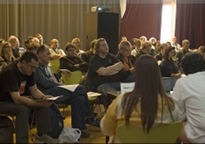
Even in Europe few jazz buffs are aware of the fact that various countries � or regions that have a certain political and economic autonomy � have chosen to promote their emerging jazz groups through showcases that only professionals have access to, and that are held annually or every second year.
Norway usually couples them with a festival in Bergen or Stavanger. The Netherlands and the Belgian Flanders organize a showcase every second year. Germany also holds its German Jazz Meeting every second year in Bremen, during the huge international jazz fair called Jazzahead!. Catalonia has its special way and organized its last showcase in Paris and London clubs for two nights last year, swapping groups from one capital to the other. It also presented a short showcase during the European Jazz Meeting at Jazzahead! this year. But Catalonia seems to be the only Southern European country or province that�s rich or organized enough to be able to afford an international showcase, anyway.
On this first week end of September, the beautifully picturesque city of Bruges was home to the 3rd Flemish Jazz Meeting (FJM). A good dozen groups were presented to a board of festival or club directors and journalists from about ten European countries. People in attendance are expected to hire these groups in their venues or write about them in their media.
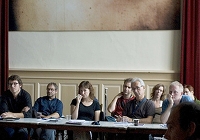
From Flemish people, you can expect a warm welcome and a well organized event, and indeed it was. No wonder: De Werf (�the workshop� in Flemish), a 20 some years old arts center that specializes in theater, theater for children and jazz, was the host. De Werf houses a nice 150 seats auditorium that is used for concerts�and for studio sessions when Rick Bevernage, its director and producer, records one of the CDs that will be issued on W.E.R.F. This label offers more than 60 releases, most of them devoted to Belgian musicians, essentially those hailing from the Flemish speaking part of the country. De Werf was perfectly ready to welcome this get together of the microcosm of European jazz organizers and writers, and to handle properly the hugs, kisses, chats, city visit. . . . including an evening opening cocktail party under an aptly prepared tent under the rain, and an afternoon barbecue later on under the Bruges� late summer warm sun and blue sky.
As far as music is concerned, the prevailing rule of this type of showcase � about 20 minutes for each group, and at the FJM five groups per night � is rarely totally compatible with the well-being of the players, nor that of the listeners. The former are often stressed to play such short sets in front of an exclusively professional audience; the latter are often frustrated when they like what they hear, and just as easily bored when they don�t. But that�s the rule and if you�re here on either side you somehow have accepted it. In both cases you must be ready, alert, efficient.
The first global remark that could be made by foreign observers was that Flanders don�t have a nationalistic perception of what jazz should be: Hijazz, the first group of the first evening included an Armenian, a Tunisian and a Moroccan, respectively on duduk (a Middle Eastern double reed instrument), oud (the Middle Eastern and North African lute) and percussion. Together with the piano, bass and drums that formed the rest of the sextet they played a nice, soft east-west mix that somehow lacked the festive or loose improv� dimension one can usually expect from that type of reunion.
Pianist Pierre Anckaert�s trio was next with its guest, virtuoso flute player Stefan Bracaval. They went from impressionist climates to Cuban rhythms with a beautiful piano sound and interesting interaction between the leader and his guest, supported by a subtle rhythm section. Yet 20 minutes were not enough for them to get rid of their initial stiffness and really convince the audience. Free Demyster, again a pianist, has a quartet that features John Ruocco, a veteran US reedman who�s been living in Belgium and the Netherlands for some time now. The group favors Ornette Coleman type of climates and its rhythm section is tight and efficient, but the interplay could be looser and the leader displays too heavy influences from the most in-view contemporary piano players to be considered original.
The atypical trio that followed was a real surprise: neither accordionist Tuur Fiorizoone nor cellist Marine Horbaczewki are virtuoso players. Their ability to improvise can also be discussed. But together with young veteran Michel Massot on trombone and tuba they have coined a very fresh and original trio sound. The repertoire favors simple melodies and supple grooves, and each instrument takes care of the song or the rhythm in turn, with Massot doing the chief job with his huge sound and seasoned creativity. It may sound strange that the least �jazzy� ensemble was the most convincing so far, but obviously here the �less is more� motto applied again.
To end this first evening with a full fledged Coltrane-like (latter period) set by the quartet of tenorist Jeroen van Herzeele may not have been the best choice as far as the concentration of the tired � though professional � audience was concerned. Fortunately this short concert started with an awesome solo by veteran French bassist Jean-Jacques Avenel (a former pillar of the Steve Lacy European ensembles), a master musician after whom it�s difficult for other player to catch the listener�s attention.
The next morning, at Bruge�s Memling Museum, the saxophone quartet Saxkartel displayed the formal sonic beauty of a classical sax quartet on compositions by its baritone player Tom Van Dyck, Dutch violist Oene van Geel, or modern and classic standards. The members of this quartet are definitely virtuoso players and their ensemble playing is perfect, but here again one would like to see them clutch less to their scores and turn their talent towards more improvisation.
On the second night the quintet of young Peruvian born pianist Christian Mendoza presented an interesting blend of rhythms and melodies where the leader�s romantic piano and the reeds and flute took the main place, but the group�s ability didn�t quite match its noble intentions, or maybe again the limited 20 minute time it was granted wasn�t enough for them to convince the audience. The following RadioKUKAorkest, a cello / accordion / clarinet / bass quartet, played a well written chamber jazz that sometimes sounded like baroque music, sometimes like film music, and even cartoon music. The frequent tempo shifts, the intertwined timbres of the instruments, and the groove of the bass were all delightful, but here again improvisation was a minor element.
Finally, one of the youngest bands, the DelVita Group, attracted interest by playing swinging, subtle post hard-bop compositions that mixed tradition and creativity with great spontaneity and fire. This sextet is co-led by two horn-men in their twenties � the brothers Steven (tenor sax, also a member of Saxkartel) and Peter (trombone) Delannoye: the �Del� in the band�s name � supported by drummer Tony Vitacolonna (the �Vita� in the band�s name). They are very promising musicians, indeed, including a very convincing tenorist, who makes clear that Mark Turner�s frequent stays in Belgium have had a positive influence on local sax players.
This was a great way to conclude a showcase that couldn�t escape the limits of the genre:
• Though the jazz schools in Europe produce more and more young musicians, it's still difficult to find 12 bands that are good enough to be presented to an international panel of professionals every second year.
• Playing in such conditions (as if they were passing an exam) is not the best way for musicians to show their skills, and indeed the level often was that of an end of the year concert in a music conservatory.
• The amount and diversity of music to be "absorbed" by the invited listeners in a limited time doesn't favor the quality of their judgment.
Maybe, then, it�s the very idea of that type of showcase that should be questioned. The years to come will tell if Northern European countries are able to find a better way to "sell" their emerging bands to their neighbors.
This blog entry posted by Thierry Quénum
Tags:

Comments are closed.