The Jazz.com Blog
September 05, 2009 · 0 comments
The Artistry of George Russell (Part 1)
Jeff Sultanof is our resident expert on arranging and composing at jazz.com. As an editor, he is responsible for making many classic jazz scores available to the publicincluding the Birth of the Cool chartsand in his contributions to this column he has championed unfairly neglected artists such as Don Ellis, Bill Finegan and Jan Savitt. Now Sultanof looks at the music of the recently departed George Russell. T.G.

On July 27, 2009, George Russell lost his battle with Alzheimers disease. Russell was yet another artist whom many people hardly knew existed but had an inestimable impact on music in the twentieth century. For those readers who are unaware of Russells influence on jazz in particular, I offer the following statement: Miles Davis Kind of Blue, perhaps the largest selling jazz album in the musics history, would not have happened without George Russell.
Russell was not only an inspired composer, but he wrote and developed a concept of scales based on the Lydian mode that revolutionized the music of jazz, and jump-started the use of modes in the music. Even those who did not know of or study The Lydian Chromatic Concept of Tonal Organization were influenced by it if they listened to the jazz of the late 1950s as played by Davis, Eric Dolphy, and Bill Evans to mention only a few. It has been called the only theory of music that came from jazz, and has had a tremendous impact in contemporary concert music as well. This is why in celebrating his life, we need to understand the depth of his influence, as well as a summary of his journey.
Russell was surrounded by music as a child, singing in the choir of the African Methodist Episcopal Church. He was a drummer with a Boy Scout Drum and Bugle Corps, and later attended Wilberforce University on a scholarship. Attempting to enlist in the Marines, it was found that Russell had tuberculosis and spent six months in the hospital, during which time he learned music theory.
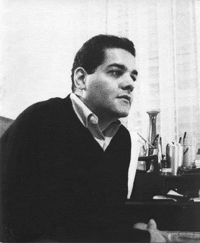
Russell later joined the Benny Carter Orchestra as a drummer. Carter heard some of his music and encouraged him to write; Russell contributed a piece to the bands book called New World. Max Roach later gave an interview stating that even then, Russell was writing strange stuff. Russell went on to write for Earl Hines and some other bands in the Chicago area. He came to New York, but tuberculosis again put him back in the hospital in 1946, as he was about to become the drummer for Charlie Parker.
It was during this second hospital stay that he reflected on a conversation he had with Miles Davis, which has been quoted many times. In 1945, Davis told him that his aim was to learn all the changes. At first interpretation, one might think that Miles wanted to be comfortable knowing and playing every chord in every key. Russell took the statement differently. He assumed that Miles already knew all of that; that what he was actually looking for was, in Russells words, the need to relate to chords in a new way.
How could chords be expanded beyond their basic structures, wondered Russell. He determined that every chord belonged to a musical scale, and once the player knew the scale, his materials for improvisation would be expanded. He also found that the Lydian scale, a mode rather than a major or minor scale, had the capacity to be a springboard for an entire series of scales because of the structure of the scale itself. (Briefly, Russell determined that the raised fourth step in the Lydian mode sounded more major because if one constructed a series of fifths on top of one another [C, G, D, A, E, B], the note above B would be F#, not F natural as in the major scale.) He was soon off and running, although it would be some years before he was able to fully formulate his ideas.
Russells career took a major leap forward when he was asked by Dizzy Gillespie to co-write a composition called Cubano-Be, Cubano Bop. According to Russell, the work has the first usage of one of the subscales in his Lydian concept. Performed at Carnegie Hall in 1947, this was hardly the first meeting of jazz and Latin music, but the piece did get a lot of publicity and was recorded by RCA Victor.
Russell was part of the group of musicians who later put together the Miles Davis Nonet of 1949-50; Russell was considered the group intellectual. When Miles Davis music was taken out of storage sometime after his death, the Birth of the Cool library was found in the three boxes of music I helped to sort through. A composition by Russell with no title was among the pieces found, minus a piano part. It is one of my great regrets that I did not edit and restore this for the Birth of the Cool folio since it was composed during the period when Russell was refining his concept, but the folio was pretty big as it was, and getting a copyright clearance probably would have been difficult.
Russell arranged for Claude Thornhill, Charlie Ventura, Artie Shaw (he wrote Similau for Shaws short-lived 1949-50 band), and for a recording date for Buddy DeFranco and big band, he wrote A Bird in Igors Yard. The side was not released until it came out on an EMI Holland LP in 1971 (1972 in the U.S.). While not a wholly successful piece, it is invaluable to hear where Russell was going musically at the time. He admits he got very few calls to write because of his musical direction, and it would have been interesting had Stan Kenton become his patronas Kenton was to Robert Graettinger. In fact, Kenton called him to contribute to the Innovations Orchestra (the dance orchestra with a string section). If he did write something, it was not played.
Lee Konitz asked Russell to write Ezz-thetic in 1949 (based on the changes of Love for Sale) in honor of heavyweight champ/bass player Ezzard Charles, but Russell had to work odd jobs outside of music for the most part for some years. The first edition of the Lydian Chromatic Concept was published in 1953. According to Russell, the book sold very few copies because it was quite expensive, but word spread that this volume had some interesting ideas.
By 1956, Russell, Gil Evans and John Carisi, the three most advanced thinkers of the arrangers associated with the Miles Davis Nonet, were all getting opportunities to write album projects. Russells pieces for Hal McKusicks RCA Victor Jazz Workshop album impressed producer Jack Lewis enough so that he commissioned Russell to make an album of his own. Russell called these compositions vignettes, and the album is one of the finest arranged small-group albums of all time. Russell was able to show the world how his theories could be used musically, and Art Farmer, Bill Evans and McKusick were excellent spokespeople for the new language. (Russell later stated that Evans never formally studied the concept with him, contrary to what has been written elsewhere.) While the album didnt break any sales records, it was reissued in 1962, first issued on CD in 1987 and has been available from one label or another since then.
This concludes the first installment of Jeff Sultanofs two-part article on composer and arranger George Russell. Check back soon for part two.
Tags:

Comments are closed.