The Jazz.com Blog
September 07, 2009 · 0 comments
Three Cheers for the University of the Streets
Jared Pauley, an editor and regular contributor to jazz.com, recently wrote about the history of the Fender Rhodes electric piano and the current state of jazz in Harlem. Now he turns his attention to a deserving and under-appreciated New York jazz institution: the University of the Streets. T.G.
New York City is home to more jazz venues than any other city in the United States, maybe the world. Many of the city's best known venues and performance spaces are located in the West Village while others line the streets of Midtown and Uptown Manhattan. Nestled away in the East Village on E. 7th Street between 1st Avenue and Avenue A is a little place called the University of the Streets. The space has been in operation since the late 1960s, founded by the late Muhammad Salahuddeen. The University of the Streets is different from other "venues" in NYC because its original focus centered around the idea of a program, where kids and teenagers in gangs could find an escape and a place to better themselves.
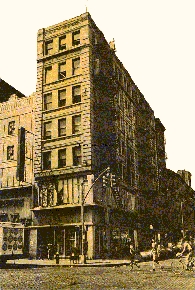
Muhammad Salahuddeen's story begins in Philadelphia, Pennsylvania in 1930, where he spent his childhood and adolescence studying art and playing the clarinet and flute. At the age of nineteen, he packed his bags and moved to New York City in 1949, where he followed his jazz musician idols around from club to club, soaking up the sounds of bebop.
By the time the 1960s had arrived, Salahuddeen was studying and teaching art at various places in New York. Around this time, he conceived his plans for the University of the Streets. The organization was incorporated in 1967 and officially moved into its current address in 1969. Born out of the anti-poverty programs of the late 1960s, the U.O.T.S. began weekend jam sessions that featured some of the most revered jazz musicians in New York City.
The heyday of the jam session was during 1969 through the late 1970s. It wasn't uncommon for artists ranging from Jackie McLean to Art Blakey or Lionel Hampton to show up and grace the jam sessions with their presence. Another musician who has enjoyed a close relationship with U.O.T.S. is pianist Barry Harris. A good friend of Salahuddeen, he still rehearses and gives piano lessons at the establishment several times a month. Salahuddeen met his wife Saadia in 1968 and following a long courtship they married in 1976. Since Muhammad's death, Saadia has been running and maintaining the space. Although the organization hasn't been a recipient of a large grant since the mid-1970s, things are hopefully about to change for the group.
I played at University of the Streets recently and the space is something you won't find in any other venue in Manhattan. The feeling of intimacy is very high and the Muhammad Salahuddeen Memorial Jazz Theater is the perfect place for aspiring jazz musicians to put on a show. The beauty of the space lies in the seating arrangement. It reminds me of a high school theater set-up. and the seating helps to enhance the performance, allowing for close interaction between the audience and the musicians. This leads me to wonder, where has our public and federal support of jazz gone? While huge art organizations can easily obtain grants and favor from our local, state and federal governments, a place like U.O.T.S., is being heavily slept on right now. Even though it's located close to the New School and NYU, there's little support for the venue right now.
I'm not sure if it has to do with the general decline in the support of jazz or if it's something else. But one thing's for certain, the history of U.O.T.S. might only be rivaled by places like the old Village Gate, Slugs and the Village Vanguard. The appeal of the organization is its humble beginnings—using the streets of NYC as its launching pad. The organization currently has music almost seven days a week and the cover charge rarely tops ten dollars. In addition, you can bring your own food and drinks. Find a bar in Manhattan that will let you do that!
On Thursdays, aspiring vocalists can come in for the Vocal Workshop series where a hired rhythm section will play the singer's original material, and on Friday nights there's a jam session with a rotating rhythm section that starts at 11:00 p.m. On Wednesday nights from 6 til 8, Richard Clements, one of the program directors, leads a piano workshop where beginners to intermediate players can pay a modest fee and learn from a professional musician.
This leads me to wonder, is our culture at large dead? Has the communal approach and aesthetic completely gone to the side? I know all of the hippies and free thinkers are close to their seventies if not already there, but where is the support for a place like U.O.T.S. in New York? Don't get me wrong, I have respect and admiration for all things jazz but it's time that the little guy got some shine alongside places like JALC. With the emergence and implementation of social advocacy in this country, I would hope that jazz music, America's music would start to receive more funding. I hope that our current president starts spending money where it needs to be spent; in our schools and on our culture so the youth of America can be instilled with some kind of appreciation and knowledge of their collective pasts.
And when this happens, places like University of the Streets might finally start to see their long and overdue appreciation come to the surface. There's nothing wrong with being an underground force, but it's even better to move beyond the underground. I think Muhammad said it best in an interview in 2000: "I've done the best that I could. I've tried to stay independent, and a lot of people have grown from it. The people can do it themselves if we can get together and realize that we're doing something together."
That's what I'm talking about, let's get together and do it ourselves! For further information on University of the Streets, check them out on the web at www.universityofthestreets.org.
This blog entry posted by Jared Pauley
Tags:

Comments are closed.