The Jazz.com Blog
September 08, 2009 · 0 comments
The Jazz Party in Vail
For his Labor Day weekend getaway, Thomas Cunniffe traveled to Vail for the 15th annual Jazz Party. During this marathon of music, our indefatigable reviewer heard some 14 ensembles. He reports on what he encountered below. (You are also encouraged to check out Cunniffe's Dozens on scat singing, published today.) T.G.
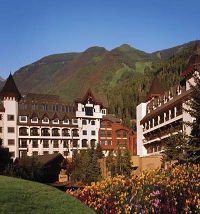
The 15th annual Labor Day Jazz Party was held September 4-7, 2009 at the town square and Marriott hotel in Vail, Colorado. The party was the final event of the Vail Jazz Festival, which included a series of free outdoor evening concerts from June-August and a jazz workshop for outstanding high-school musicians.
For this year’s party, producer Howard Stone brought together Ann Hampton Callaway and her trio, Brian Lynch’s “Spheres Of Influence” quintet, the Jeff Hamilton trio, and the Clayton Brothers Quintet. Added to this mix were soloists Joel Frahm, Dave Corbus, Wycliffe Gordon, Benny Green, Tony Monaco and Antonio Hart. The party atmosphere allowed the musicians to play in various settings and for the audience to hear all of the musicians without attending the entire event. In two music-filled days, I heard 14 different combinations of players ranging from solo piano to a 25-voice gospel choir.
Jeff Hamilton played in three different groups on Saturday, opening the afternoon with his trio (featuring guest soloist John Clayton), then powering Monaco’s explosive evening set and closing the night with the Hart/Gordon/Terell Stafford jam session. Hamilton, one of the most adaptable drummers on the scene today, was perfect for all three sessions. His trio set (with pianist Tamir Hendelman and bassist Christoph Luty) featured a wide range of repertoire. The highlight was an original samba featuring a drum solo on which Hamilton used—in turn—sticks, brushes and hands. Both Clayton and Luty played wonderful bowed bass solos in Clayton’s original “Blues For Stephanie.”
When Monaco took the stage that evening, his all-star band played a wild, go-for-broke set with all participants playing at their peak. Frahm, equally comfortable in R&B and jazz settings, played blistering solos that balanced the two styles and excited the crowd. Lynch, playing more inside than with his own quintet, and Corbus, a fine guitarist with roots in electric blues and straight-ahead jazz, were superb foils on the front line. Monaco, a wild organist who must be seen live to be fully appreciated, provided an energetic mix of every jazz organ master from Jimmy Smith to Larry Young—usually within the same solo! Midway through the set, Hamilton followed a series of brilliant horn solos on Coltrane’s “Impressions” with a kinetic set of 8-bar exchanges (has anyone ever traded eights on that tune before?). An hour and a half later, Hamilton was behind the drum kit again to provide solid support through the late-night jam session.
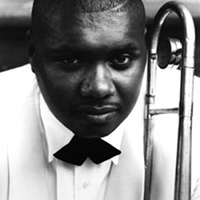
If Hamilton was the star of Saturday’s show, Wycliffe Gordon had the same duty on Sunday. I doubt he slept much after playing on the late Saturday night sets, but there he was at 10 o’clock Sunday morning for the “Gospel Prayer Meeting”, a longtime staple of the festival. Gordon, Stafford and a slightly more reserved Monaco were joined by alto saxophonist Jeff Clayton and drummer Obed Calvaire for a spirited program of traditional standards including “Down By The Riverside” and “Amazing Grace”. Gordon led the first group of the afternoon in a delightful set of New Orleans-inspired songs. Hart shared the front line with Gordon, while Hendelman, Luty and drummer John Riley provided backup. Gordon’s wide-ranging talent was on full display here, singing and scatting on most of the tunes, playing exquisite plunger trombone on “Basin Street Blues” and agile tuba (with multiphonics) on “Honeysuckle Rose”. The latter tune also included a delightful tuba/bass duet, and a sprightly “Rhythm-A-Ning” opened with an alto/tuba/drums chorus which burst into a full-throated alto solo by Hart.
Gordon also participated in Bill Cunliffe’s Oliver Nelson tribute, “Blues & The Abstract Truth, take 2.” The band played Cunliffe’s new arrangements of songs from Nelson’s classic Impulse album, with Jeff Clayton contributing a gorgeous solo on “Stolen Moments” and Frahm blazing through “Cascades”. The rhythm team of Cunliffe, John Clayton and Lewis Nash played a lovely version of Nelson’s “Black, Brown & Beautiful”, which as Cunliffe pointed out, has a more-than-passing resemblance to Leon Russell’s later pop hit “You Are So Beautiful.” In addition to being a superb pianist, Cunliffe is also a fine jazz historian (and despite the similar surname, he’s not related to me). Later that evening, Cunliffe presented the latest of his multimedia tributes for the festival, this one featuring the music and life of Freddie Hubbard, with live music provided by the Clayton Brothers quintet.
On Saturday afternoon, the Clayton Brothers (with Stafford on trumpet, Cunliffe subbing for the absent Gerald Clayton and Nash on drums) presented a tribute to their mentors and influences. The Adderleys might be the most obvious models for the Claytons (and they performed a Cannonball inspired piece, “Big Daddy Adderley”), but the finest moments were the tributes to Ray Brown and the Jones brothers. John Clayton told the audience that he now plays the very same bass that Brown did when the two bassists first met. The instrument is truly remarkable, and Clayton drew a deep rich sound in his bowed version of “Round Midnight.” The set concluded with two movements from John’s new piece called “THE Family Detroit,” dedicated to Thad, Hank and Elvin Jones (the brother’s first initials form the “THE” in the title). Hank’s movement was very slow and achingly beautiful; Elvin’s movement featured rolling 12/8 rhythms and an impressive solo by Nash. The entire piece was premiered (with the quintet and big band) at the Detroit Jazz Festival on Labor Day, so the quintet left Vail late Sunday to fly to Detroit for the performance. Here’s hoping that a recording will be forthcoming.
The Vail All-Stars, an astonishing group of high-school jazz musicians, were a constant and welcome presence all weekend. Led and tutored by the Clayton brothers, the 12 players all have a strong grasp of the jazz language and even if they are not yet masters at soloing, they are all far beyond the average soloists in high school and undergraduate university jazz programs. John Clayton expected each player to create new tunes and arrangements, and insisted that all the music be taught aurally. The students worked together in an intense week-long workshop and then played superb hour-long sets for the Saturday and Sunday afternoon shows and at a dinner for pass-holders and benefactors of the festival. Keep an ear out for these talented musicians as they may be the giants of the future: Noah Hocker, Benjamin Kreitman, Cody Rowlands (trumpet), Braxton Cook, Tyrone Martin (alto sax), Maxmillian Zooi (tenor sax), Luke Celenza, Alec Watson (piano), Jared Mulcahy, Bill Vonderhaar (bass), Daniel Higuera & Evan Sherman (drums).
For me, the highlight of the weekend was the set by Ann Hampton Callaway. While she has several fine albums to her credit, she is another artist who is at her best in front of an audience. Her stage banter is fast-paced, her humor is disarming, and above all, her voice is simply amazing. Most of her singing is in the low, sultry and rich alto range, but when she scats, she soars almost two octaves higher with the bright sound of a soprano. After her slow heartfelt “Ev’rytime We Say Goodbye” (sung in memory of her recently deceased father, broadcaster John Callaway) she turned the mood around with uncanny impressions of Billie Holiday and Sarah Vaughan singing Callaway’s original theme song from the The Nanny. At the end of the set, Callaway went to the piano and improvised a new song about Vail, based on audience suggestions of “snow” and “real estate.” Callaway’s live show is just too good to be a secret—perhaps her next album should be recorded live.
Other party highlights included Stafford with Lynch and his energetic band on a Latin-drenched arrangement of Miles Davis’ “Solar,” the excellent Mile High Chapter Choir from Denver who closed the Sunday morning prayer meeting with an exuberant sing-along of gospel hymns, and the solo piano sets that opened the evening concerts. Benny Green played a spellbinding “You’re Blasé” which completely captivated the audience. On faster tunes like “Bean and the Boys,” his technique was stunning, with very clean articulation and brilliant single-line improvisations. Hendelman was equally impressive the next night, with a set of songs tied to seasons and months. While Hendelman can play convincingly in the uninhibited style of Gene Harris, he can also play very sensitively, as in his opening rendition of “September Song.”
With its congenial atmosphere, beautiful setting and challenging programming, many musicians have made the Vail Jazz Festival an annual stop on their itineraries. This year, the Clayton brothers, Cunliffe, Gordon, Hamilton, Callaway and the Mile High Chapter Choir were all returning participants. While I’ve attended the Vail party before, I’m always impressed with the new combinations of players and the fresh way that the musicians approach their new surroundings. Even when some of the cast stays the same, I come back because I know it will be a new experience. Of course, that’s why the musicians come back, too.
This blog entry posted by Thomas Cunniffe
Tags:
Comments are closed.