The Jazz.com Blog
February 17, 2009 · 0 comments
A Giant's Steps: John Coltrane on Atlantic (Part Three)
Fifty years ago this month, John Coltrane purchased a soprano saxophone . . . and the jazz world is still dealing with the fall-out. On his Atlantic recordings, Coltrane began developing his unique soprano sound and pushing his tenor work to the next level, yet these tracks are often obscured by Trane's later, more overtly experimental work for the Impulse label. Chris Kelsey looks back at this music below in the third and final installment of his survey, "A Giant's Steps." Click here to read part one and part two of this article. T.G.
As Giant Steps overshadows Coltrane Jazz, so does My Favorite Things sometimes seem to obscure Coltrane's Sound and Coltrane Plays The Blues in the consciousness of contemporary jazz fans. Like Coltrane Jazz, however, both Sound and Blues have much to recommend them.
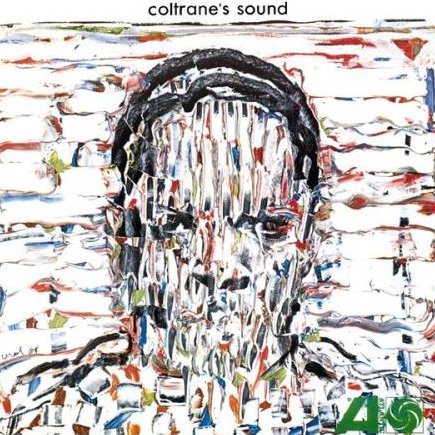
Coltrane's Sound debuts three original compositions that would be covered by countless jazz musicians over the decades"Central Park West," "Equinox," and "Liberia." The album includes a definitive performance of "The Night Has a Thousand Eyes," and a brilliant re-imagining of "Body and Soul." Also notable is a performance of Coltrane's composition "Satellite," on which Tyner abjures, as the saxophonist is accompanied only by bass and drumssomething that was to occur with some regularity in coming years. Tyner also lays out behind Coltrane's solo on "26-2," a Coltrane tune based on the Charlie Parker original, "Confirmation." On "26-2," after playing the opening head and soloing on tenor, Trane changes horns in the middle of the stream and closes on soprano, an unusual choice at that, or any other, time.
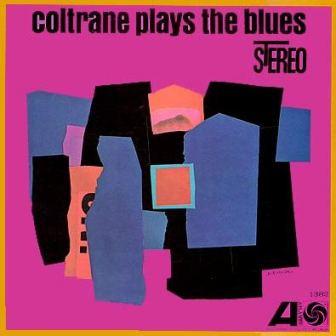
Coltrane Plays The Blues is exactly that: a collection of blues performances by Tranesix total, all his original compositions. As concepts go, it's pretty minimal, but that's okay, because it places full attention on one of Coltrane's major strengths, his power as a blues player. The moods vary. There's the smoke-filled-bar ambience of "Blues To Elvin" and "Blues To Bechet"; the "Chasin' the Trane" precursor, "Blues To You"; the noir-ish "Mr. Sims;" the Latin-tinged "Mr. Knight;" and the idiosyncratic post-bop of "Mr. Day." Coltrane is in top form throughout, expertly combining agility and expression. We also hear Jones open-up, perhaps feeling liberated by the blues form. Following on the heels of the tuneful My Favorite Things and the sophisticated compositions and arrangements of Coltrane's Sound, Coltrane Plays The Blues goes down like a shot of good Kentucky bourbon. It burns so good.
Coltrane signed a new recording contract with the Impulse label in April, 1961. On May 23, he went into the studio for the first of two sessions that would result in his initial release for Impulse, Africa/Brass. He still owed Atlantic another album, however, so two days later, he entered the studio with Tyner and Jones, multi-reedist Eric Dolphy, trumpeter Freddie Hubbard, and bassists Art Davis and Reggie Workman. All of them also played on the Africa/Brass sessions, a huge project that included large woodwind and brass sections. The Atlantic record, Ol Coltrane, would be smaller in scale, yet similar to Africa/Brass, with its use of modality and the influence of Latin, African, and Asian musics.
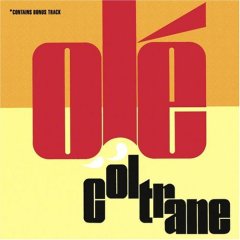
The title track's 6/8 rhythmic vamp and use of the Phrygian mode give the tune a Spanish or North African cast. Several months after the recording of "My Favorite Things," we hear a rhythm section grown fully comfortable with the modal concept. Tyner and Jones play with greater assertiveness, and the dual basses of Reggie Workman and Art Davis (replacing Steve Davis) give the underlying groove a sharper rhythmic edge. "Dahomey Dance" is a blues taken in a modal direction. "Aisha" is a lovely minor-key ballad written by Tyner, and a thoroughly characteristic tune for this band. "To Her Ladyship" is a Coltrane-written ballad, highlighting his soprano work (his sound is uncharacteristically dry, but effective), Dolphy's mercurial flute, and Hubbard in a lyrical mood.
After finding first voice with My Favorite Things, Coltrane's Sound, and Coltrane Plays The Blues, Ol Coltrane shows Coltrane's new core group (Tyner, Workman, Dolphy, and Jones) reaching a high level of maturity; a maturity that would blossom further, later that year with the epochal Live at the Village Vanguard sets on Impulse!. Of all Coltrane's studio recordings, Ol might win the award for the most unfairly overlooked. Yet it's the culmination andto that pointthe fullest flowering of his classic collaborations with Tyner and Jones, signaling definitively the path he was to follow in coming years. As such, it's an essential release, and a perfect ending to Coltrane's superb series of recordings for Atlantic.
This is part three of Chris Kelsey's three-part piece on John Coltrane's Atlantic years. Parts one and two can be read here and here.
Tags:

Comments are closed.